

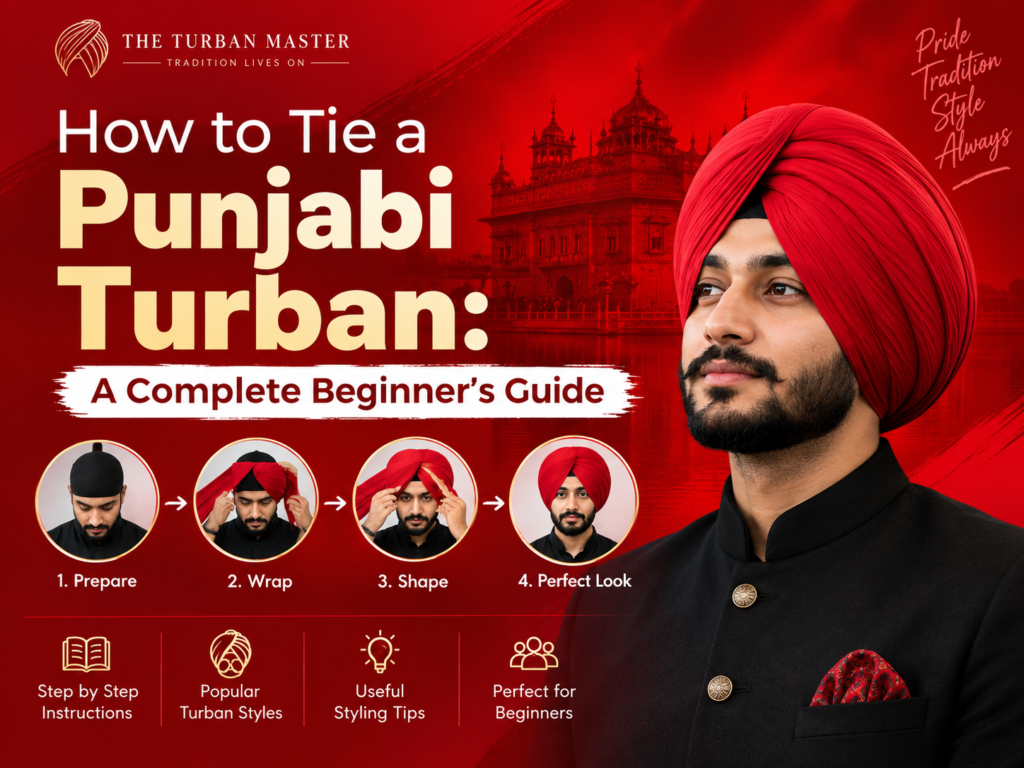
Learning how to tie a Punjabi turban, also known as a Pagg or Pagri, takes patience, practice, and the right technique. From preparing the turban cloth to creating clean folds and achieving a comfortable finish, every step contributes to the final look.
The Punjabi turban is much more than a traditional head covering. It represents heritage, identity, dignity, and personal style. Across Punjab and Punjabi communities around the world, different turban styles are worn for everyday life, religious occasions, weddings, cultural celebrations, and special events.
For someone seeing a perfectly tied Punjabi turban, the process may appear simple. However, creating even folds, maintaining the right tension, shaping the front, and keeping the turban comfortable throughout the day requires practice and technique.
If you are a beginner and want to learn how to tie a Punjabi turban, this guide will help you understand the basic process, turban cloth preparation, popular Punjabi turban styles, common mistakes, and useful styling tips.
What Is a Punjabi Turban?
A Punjabi turban, commonly known as a Pagg or Pagri, is traditionally created by wrapping a long piece of cloth around the head using carefully arranged folds and layers.
The final appearance of a Punjabi turban can vary depending on the style, fabric, cloth length, folding technique, head shape, personal preference, and occasion.
Popular Punjabi turban styles include Patiala Shahi, Wattan Wali, Amritsar Shahi, Morni and several other traditional and contemporary styles.
Why Learn How to Tie a Punjabi Turban?
Learning how to tie your own Pagg can be a valuable traditional skill. It allows you to understand how different fabrics, folds, shapes, and tying techniques work together.
Learning Punjabi turban tying can help you:
- Understand different Punjabi turban styles.
- Prepare and handle turban cloth correctly.
- Create cleaner and more consistent folds.
- Develop better control over fabric tension.
- Adjust the turban for comfort.
- Style your own turban for special occasions.
- Preserve and pass on a traditional skill.
What You Need to Tie a Punjabi Turban
Before you begin learning Punjabi turban tying, prepare the basic items you need.
1. Turban Cloth
Suitable turban cloth is the foundation of a good-looking turban. The required length and fabric can vary depending on the style, head size, cloth width, and preferred tying technique.
2. Large Mirror
A large mirror is especially useful when learning. It allows you to check the front, sides, and overall shape of your turban while you practice.
3. Proper Hair Preparation
Your hair should be properly prepared and secured before starting. A comfortable and stable foundation makes it easier for the turban to sit correctly.
4. Patience and Practice
Turban tying is a hands-on skill. Your first attempt may not look perfect, and that is completely normal. Regular practice will help you improve your fold consistency, hand coordination, and overall technique.
How to Tie a Punjabi Turban Step by Step
The exact technique varies according to the style you are learning. However, the following steps explain the basic principles behind Punjabi turban tying.
Step 1: Prepare the Turban Cloth
Start by preparing your turban cloth. Make sure it is clean, properly arranged, and free from unnecessary wrinkles.
Depending on the turban style, the cloth may need to be folded or prepared in a particular way before tying. Proper preparation makes the fabric easier to control and helps create more consistent folds.
Step 2: Prepare Your Hair
Before starting the turban, prepare your hair according to your normal routine. The hair should be comfortable and secure so the turban has a stable foundation.
Avoid unnecessary bumps or loose sections that could affect the final shape of the turban.
Step 3: Stand in Front of a Mirror
Stand comfortably in front of a large mirror and keep your head in a natural position while tying.
If you are completely new to turban tying, having an experienced person guide you can make the learning process easier.
Step 4: Position the Turban Cloth
Position the cloth according to the style you are learning. Different Punjabi turban styles can have different starting positions and wrapping techniques.
At this stage, focus on keeping the fabric comfortable and evenly distributed.
Step 5: Create the First Fold
The first fold establishes the foundation for the remaining layers. Create a clean fold and position it carefully.
Do not worry about speed. When learning how to tie a Punjabi Pagg, accuracy and consistency are more important than completing the process quickly.
Step 6: Continue Creating Even Folds
Continue wrapping the cloth while creating folds of similar size. Try to maintain consistent fold width, spacing, tension, and alignment.
- Keep the fold width reasonably consistent.
- Maintain similar spacing between folds.
- Avoid suddenly increasing or decreasing tension.
- Keep the cloth under control as you move around the head.
Step 7: Shape the Front
The front of the turban has a major influence on its overall appearance. Depending on the style, the front may have a fuller, narrower, layered, or more structured appearance.
Take your time when shaping the front and check it from different angles while you continue tying.
Step 8: Maintain Comfortable Tension
Avoid pulling the turban cloth excessively tight. The turban should be secure while remaining comfortable to wear.
Try to maintain reasonably consistent tension throughout the tying process rather than making some sections very tight and others loose.
Step 9: Continue Around the Head
Continue wrapping the cloth according to your selected style. Pay attention to how each layer contributes to the overall shape.
If you notice an uneven section, correct it before continuing. Small corrections during the process are usually easier than trying to fix everything at the end.
Step 10: Finish the Turban
The final section of cloth should be tucked or secured according to the style being created.
Keep the finish neat and avoid unnecessary bulk. The finishing technique can make a noticeable difference to the overall appearance.
Step 11: Check the Final Look
Once the turban is complete, inspect it from different angles.
- Check the front.
- Check the left side.
- Check the right side.
- Look for uneven folds.
- Check the overall height and shape.
- Make sure there are no unnecessary loose sections.
- Make sure the turban feels comfortable.
Popular Punjabi Turban Styles
Punjabi turban tying includes a variety of traditional styles. Each style has its own shape, folding pattern, and finishing technique.
Patiala Shahi Turban
The Patiala Shahi Turban is a distinctive traditional Punjabi style known for its characteristic shape and fuller appearance. It is often selected for cultural occasions, traditional events, and weddings.
Wattan Wali Turban
The Wattan Wali Turban is recognized for its distinctive folds and elegant traditional appearance. Creating clean and consistent folds is important when styling this look.
Amritsar Shahi Turban
The Amritsar Shahi Turban is another traditional Punjabi style. Its final appearance depends on the folding technique, fabric, and way the cloth is positioned around the head.
Morni Style Turban
The Morni Style Turban has a distinctive silhouette and is particularly popular for weddings and special occasions. The final shape depends on the tying technique and personal styling preferences.
Jodhpuri Style
The Jodhpuri Style has a different visual character and is often selected for formal occasions and weddings. It can be paired with a sherwani or other traditional formal outfits.
How to Choose the Right Punjabi Turban Style
Choosing a turban style depends on your outfit, occasion, personal preference, and the overall appearance you want to create.
Consider Your Outfit
Your turban should complement your complete outfit rather than compete with it. Consider your sherwani, kurta pajama, jacket, dupatta, footwear, and accessories.
Consider the Occasion
A turban for everyday wear may have different styling requirements from a wedding or formal event.
Consider whether you are dressing for:
- Everyday wear
- Gurpurab
- Wedding ceremony
- Anand Karaj
- Engagement
- Reception
- Pre-wedding function
- Cultural celebration
- Photo shoot
- Special event
Consider Comfort
If you are going to wear your turban for several hours, comfort is important. The fabric, folds, tension, and tying style should work together to create a secure but comfortable fit.
How to Choose the Right Turban Color
Turban color can play an important role in completing a traditional or wedding outfit.
When selecting a color, consider the colors already present in your clothing and accessories.
- Sherwani
- Kurta pajama
- Sehra
- Kalgi
- Dupatta
- Wedding theme
Your turban does not always need to be an exact color match with your outfit. A complementary shade can also create a balanced and stylish traditional look.
How to Choose the Right Turban Fabric
Turban fabric can affect the appearance, structure, comfort, and ease of tying.
When choosing turban cloth, consider:
- The turban style
- The occasion
- Desired fold definition
- Comfort
- Your experience level
- Personal preference
Different fabrics behave differently when folded and wrapped. If you are buying turban cloth for the first time, professional guidance can help you choose an appropriate option.
How Much Cloth Is Needed for a Punjabi Turban?
There is no single cloth length that works for every person and every turban style.
The required amount can depend on:
- Head size
- Cloth width
- Turban style
- Folding technique
- Number of layers
- Desired shape
- Personal preference
It is therefore better to select the cloth according to the specific turban style you want to wear rather than simply copying the amount used by someone else.
Common Punjabi Turban Tying Mistakes
Understanding common mistakes can make learning Punjabi turban tying easier.
Uneven Folds
Uneven folds can make the finished turban look unbalanced. Practice creating folds with similar widths and spacing.
Tying the Turban Too Tight
Pulling the cloth too tightly can affect comfort. Aim for a secure fit without unnecessary pressure.
Ignoring the Side Profile
A turban may look good from the front but uneven from the side. Check the front and both sides regularly while tying.
Focusing Only on Speed
Trying to tie a turban quickly before mastering the technique can result in inconsistent folds. Focus on accuracy first. Speed will naturally improve with practice.
Using Unsuitable Fabric
Some fabrics may be more difficult for beginners to control. Choose a fabric appropriate for the style you are learning.
Trying a New Style on Your Wedding Day
Your wedding day is not the ideal time to experiment with a completely new turban style. Practice beforehand or consider arranging a professional turban tying service.
Punjabi Turban Styling for Weddings
For many grooms, the wedding turban is an important part of the traditional wedding outfit. A professionally styled groom pagdi can complement the sherwani, accessories, and overall wedding theme.
Popular wedding options include:
- Punjabi Groom Pagdi
- Patiala Shahi Turban
- Wattan Wali Turban
- Morni Style Turban
- Amritsar Shahi Turban
- Jodhpuri Style
- Customized Wedding Turban Styles
Groom Pagdi Styling Tips
If you are choosing a groom pagdi, consider your complete wedding outfit rather than selecting the turban separately.
Match the Overall Style
Select a turban style that complements your sherwani or traditional wedding outfit.
Choose the Color Carefully
Consider the main color, embroidery, accessories, and overall wedding styling when choosing your turban color.
Consider Accessories
Accessories such as a kalgi, sehra, brooch, or other traditional elements can influence the final appearance of the groom’s pagdi.
Practice Before the Wedding
If you plan to tie your own wedding turban, practice your preferred style several times before the wedding day.
Consider Professional Turban Tying
For an important occasion, a professional turban artist can help create a neat, consistent, and event-appropriate finish.
Can Beginners Learn Punjabi Turban Tying at Home?
Yes, beginners can start learning Punjabi turban tying at home. A mirror, suitable turban cloth, and regular practice can help you understand the basic movements.
However, turban tying is a practical skill. Details such as hand positioning, fabric tension, fold placement, and shaping can be difficult to understand through written instructions alone.
Professional turban training allows you to learn through demonstration and hands-on practice, which can make the learning process easier.
How Long Does It Take to Learn Turban Tying?
There is no fixed amount of time required to learn turban tying. Everyone progresses at a different pace.
Your progress can depend on:
- How frequently you practice
- The turban style you are learning
- Your familiarity with the fabric
- Your hand coordination
- Whether you have professional guidance
Instead of focusing only on speed, concentrate on creating clean folds, maintaining comfortable tension, and achieving a balanced shape.
Benefits of Learning Turban Tying
Learning the traditional art of turban tying can provide both practical and cultural benefits.
- Develop a valuable traditional skill.
- Understand different Punjabi turban styles.
- Learn to tie your own turban.
- Help family members prepare for special occasions.
- Prepare for weddings and cultural celebrations.
- Explore professional turban styling.
- Preserve traditional techniques for future generations.
Why Choose Professional Turban Tying?
While learning to tie your own turban can be rewarding, professional assistance can be particularly useful for weddings, cultural events, and important celebrations.
An experienced turban artist can help with:
- Turban style selection
- Turban cloth preparation
- Professional turban tying
- Fold consistency
- Shape and finishing
- Groom pagdi styling
- Barati turban styling
- Event-specific styling
Professional styling can also save time when several people need their turbans tied before a wedding or special event.
Professional Turban Tying Services by The Turban Master
At The Turban Master, we provide professional turban and pagdi tying services for weddings, pre-wedding functions, cultural events, special occasions, media appearances, and celebrations.
Our turban styling options include a range of traditional and occasion-specific styles:
- Patiala Shahi Turban
- Wattan Wali Turban
- Morni Style
- Amritsar Shahi
- Jodhpuri Style
- Rajasthani Style
- Hindu Pagdi
- Dumalla
- UK Style
We also provide turban tying training for individuals who want to learn the traditional art of tying different turban styles.
Whether you are a groom looking for a wedding pagdi, a family member preparing for a celebration, a group of baratis, or someone interested in learning turban tying, professional guidance can help you achieve the look you want.
Final Thoughts on Punjabi Turban Tying
Learning how to tie a Punjabi turban is a process that requires patience, practice, and attention to detail.
From preparing the turban cloth and creating the first fold to shaping the front and finishing the final layer, every part of the process contributes to the final appearance.
Start with one style and practice the fundamentals before moving on to more advanced styles. Pay attention to fold consistency, comfortable tension, fabric selection, and overall shape.
If you are preparing for a wedding or special event, professional turban tying can provide a polished and traditional appearance while allowing you to focus on enjoying your occasion.
The Punjabi turban is a reflection of tradition, identity, pride, and personal style. Learning its art is not simply about wrapping cloth around the head—it is about understanding and preserving a skill that has been passed down through generations.
Frequently Asked Questions About Punjabi Turban Tying
What is a Punjabi turban called?
A Punjabi turban is commonly called a Pagg or Pagri. Different communities and regions may use different terms.
How do you tie a Punjabi turban?
A Punjabi turban is tied by wrapping prepared turban cloth around the head and creating a series of controlled folds and layers. The exact technique varies according to the style.
Is Punjabi turban tying difficult?
Turban tying can take practice because maintaining consistent folds, tension, and shape requires hand coordination. Beginners can start with one style and gradually develop their skills.
Can I learn how to tie a Punjabi Pagg at home?
Yes. You can practice at home using suitable turban cloth and a mirror. Professional training can provide additional guidance on hand movements and style-specific techniques.
Which Punjabi turban style is suitable for a wedding?
The choice depends on the groom’s outfit, personal preference, wedding theme, and desired appearance. Popular wedding options include Patiala Shahi, Wattan Wali, Morni, Amritsar Shahi, and other traditional styles.
What color turban should I wear with a sherwani?
Choose a color that complements your sherwani and overall wedding outfit. The turban does not always need to be an exact color match.
How much cloth is required for a Punjabi turban?
The required cloth length depends on the style, head size, cloth width, tying technique, and preferred appearance.
Which fabric is suitable for a Punjabi turban?
The appropriate fabric depends on the turban style, occasion, comfort requirements, and personal preference. Different fabrics can produce different fold definition and structure.
How long does it take to tie a Punjabi turban?
The time depends on the turban style and the experience of the person tying it. Experienced turban artists can generally work more efficiently than beginners.
Can a professional turban artist tie turbans for wedding guests?
Yes. Professional turban services can be arranged for grooms, family members, baratis, wedding guests, and groups depending on the event requirements.
Do you provide turban tying training?
Yes. The Turban Master provides turban tying training for individuals who want to learn traditional and contemporary turban styles.
Book Your Professional Turban Tying Service
Planning a wedding, cultural celebration, or special event? Let The Turban Master create a traditional and polished turban look for your special occasion.
From groom wedding pagdis and barati turbans to traditional Punjabi styles and turban training, we provide professional styling for memorable occasions.